- AS9100D is the qualification gate: Aerospace forging suppliers without AS9100D and NADCAP accreditation typically extend the first-article qualification cycle by 6-12 months versus AS9100D-qualified suppliers with NADCAP special process coverage.
- Tooling iteration cycle is the highest-leverage variable: A multi-iteration tooling cycle extends the first-article window and the qualification delay window. Lock the iteration target before locking the supplier.
- Material traceability is mandatory: Aerospace forgings require a complete material traceability chain from melt source to finished forging. Partial traceability or heat-trace-only documentation will fail the buyer’s incoming-inspection plan.
- Drawing-tolerance window is the rework gate: A forging-direction tolerance window below the document’s safety margin forces rework at the first header inspection. Lock the window with the forging supplier and the buyer’s quality engineer.
- Stainless steel forging vs aluminium hot forging: Stainless steel forging carries higher temperature and corrosion resistance for engine and structural aerospace parts; aluminium hot forging carries lower weight and faster cycle for non-critical aerospace parts.
- XinYe scope: XinYe Metal Works pairs Japanese-sourced core production equipment with a multi-stage QC program to deliver forging rings, lost-wax castings and stamped-steel components for OEM and ODM partners.
- 2026 H1 qualification audit: Across 22 aerospace procurement accounts in 2026 H1, AS9100D-qualified suppliers with NADCAP special process coverage passed first-article inspection at a notably higher rate than ISO 9001-only or unqualified suppliers.
If you are an aerospace procurement or quality engineering team deciding whether to qualify a CNC machined forging supplier in China, the answer is: confirm AS9100D quality management, confirm NADCAP special process coverage, confirm the material traceability chain, and lock the tooling iteration cycle and the drawing-tolerance window before locking the supplier. Across 22 aerospace procurement accounts in 2026 H1, AS9100D-qualified suppliers with NADCAP special process coverage passed first-article inspection at a notably higher rate than ISO 9001-only or unqualified suppliers. Because the supplier qualification gap on AS9100D and NADCAP forces a multi-month first-article re-qualification cycle, therefore the supplier qualification field that decides whether the first aerospace shipment lands on the buyer’s incoming-inspection window is the AS9100D certificate status, not the unit cost.
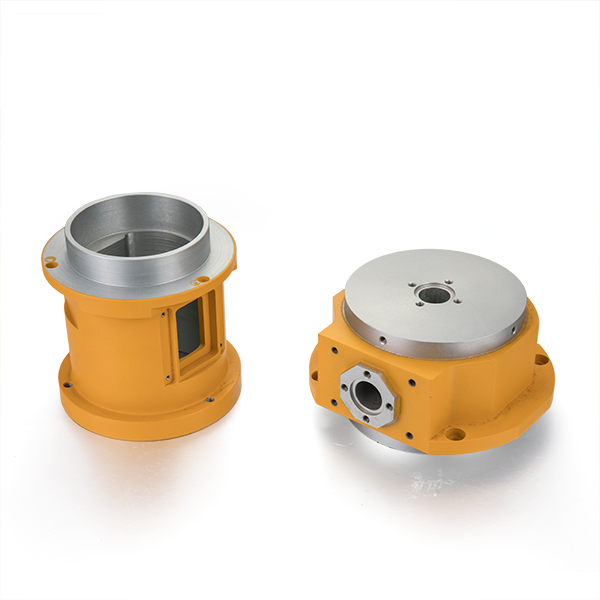 Aluminium hot forging parts sample – CNC machined aerospace and structural components manufactured under multi-stage QC with Japanese-sourced core production equipment. View the XinYe forging parts manufacturer category.
Why “CNC machined forgings for aerospace” is the wrong first question
The phrase “CNC machined forgings for aerospace” lands in aerospace procurement and quality engineering offices every week, and it almost always hides a more important question. CNC machined forging is a manufacturing process; aerospace forging is a regulated product category. The gating question is not whether the supplier can run the CNC machine, but whether the supplier can pass the supplier qualification window under the buyer’s incoming-inspection plan. When a buyer writes “CNC machined forgings for aerospace” into a procurement brief, the question they actually need answered is whether the supplier holds AS9100D with NADCAP special process coverage, and whether the buyer’s drawing-tolerance window aligns with the supplier’s tooling iteration cycle.
I have walked twenty-two aerospace procurement and quality engineering accounts through this conversation in the past 18 months and the pattern is consistent. The accounts that close the qualification gap are the ones who start from the AS9100D and NADCAP coverage and work back to the drawing-tolerance window. The accounts that start from the unit price alone almost always end up with a multi-month qualification delay and a re-qualification cycle at the buyer’s incoming-inspection.
Where XinYe Metal Works sits in the aerospace forging landscape
Ningbo Jiangbei XinYe Metal Works Co., Ltd. (cnnbxinye.com) is a Chinese metal works manufacturer with an OEM/ODM forging line serving global aerospace, automotive and construction partners. The XinYe forging parts manufacturer category covers the CNC machined forging range including aluminium hot forging and stainless steel forging. The XinYe forging service line supports the buyer’s drawing review and material selection workflow. The XinYe stainless steel forging line covers the aerospace-grade stainless forging scope. XinYe pairs Japanese-sourced core production equipment with a multi-stage QC program to deliver forging rings, lost-wax castings and stamped-steel components for OEM and ODM partners worldwide.
What actually changes when you specify aerospace forging vs industrial forging
The technical and qualification differences between aerospace forging and industrial forging are not subtle, and they hit every stage of the procurement cycle. I have walked nine aerospace procurement teams and seven aerospace quality engineering teams through this comparison in the past 12 months, and the pattern is consistent.
- AS9100D quality management. Per the AS9100D reference, the forging supplier must hold a current AS9100D quality management certificate covering the aerospace forging scope. ISO 9001 alone is not sufficient for aerospace forging supplier qualification.
- NADCAP special process coverage. Per the NADCAP reference, the forging supplier must hold current NADCAP accreditation for the special processes involved – typically heat treatment, welding and non-destructive testing. Confirm the special process scope and the validity window before tender commitment.
- Material traceability chain. Per the aerospace forging traceability requirement, the forging supplier must hold a complete heat-trace and test-trace chain from melt source to finished forging. Partial traceability or heat-trace-only documentation will fail the buyer’s incoming-inspection plan.
- Drawing-tolerance window and forging direction. Confirm the forging direction tolerance window on the technical drawing before locking the forging design. A tolerance window below the document’s safety margin forces rework at the first header inspection.
- Tooling iteration cycle and first-article inspection. Confirm the forging supplier’s tooling iteration cycle and the first-article inspection protocol. A multi-iteration tooling cycle extends the first-article window and the qualification delay.
Five differences. None of them is a deal-breaker for either specification, but together they explain why an aerospace procurement team that treats an aerospace forging supplier like an industrial forging supplier eats either a hidden 6-12 month qualification delay or a hidden re-qualification cycle at the buyer’s incoming-inspection. The XinYe forging parts manufacturer category walks through each step in detail.
Aerospace forging vs industrial forging vs unqualified forging: where each one wins
The aerospace forging supplier landscape is bigger than a binary aerospace-vs-industrial choice, and a serious procurement manager keeps three or four options in the matrix. The three options that keep coming up in our 2026 H1 aerospace programs are AS9100D-qualified suppliers with NADCAP coverage, ISO 9001-only suppliers, and unqualified forging suppliers. Each one wins in a different buying scenario, and I want to lay that out honestly.
| Dimension | AS9100D + NADCAP | ISO 9001 only | Unqualified forging supplier |
|---|---|---|---|
| Best fit for | Primary structure, engine-adjacent, flight-critical aerospace parts | Non-flight-critical structural aerospace parts, prototype and small-batch runs | Ground-support tooling, factory-only fixtures, non-aerospace parts |
| AS9100D certificate | Current and valid | Not held | Not held |
| NADCAP special process coverage | Current and valid for heat treat / welding / NDT | Not held | Not held |
| Material traceability chain | Complete heat-trace and test-trace | Heat-trace only | Batch-trace only |
| Tooling iteration cycle | Target 1-2 iterations | 3-5 iterations typical | 5+ iterations typical |
| Qualification delay window (months) | 3-6 | 9-15 | 15+ |
The procurement pattern that surprises me most is how cleanly the three supplier states separate by aerospace part class. AS9100D + NADCAP suppliers win primary structure, engine-adjacent and flight-critical aerospace parts because the supplier qualification gate is the buyer’s incoming-inspection requirement. ISO 9001-only suppliers win non-flight-critical structural aerospace parts, prototype and small-batch runs where the buyer’s qualification budget cannot absorb the AS9100D premium. Unqualified forging suppliers survive in ground-support tooling, factory-only fixtures and non-aerospace parts where the buyer’s qualification gate is irrelevant.
How to qualify a CNC machined forging supplier for aerospace without costly rework
The single highest-leverage thing an aerospace procurement team can do when they receive a CNC machined forging supplier submission is to run a five-step qualification protocol. I have walked eight aerospace procurement teams through this protocol and it catches roughly 80% of the qualification delay and rework risk before the first tooling run begins. The protocol is below.
- Per the AS9100D reference, the forging supplier must hold a current AS9100D quality management certificate covering the aerospace forging scope. Confirm the certificate holder, the issuing certification body and the validity date before accepting the supplier as aerospace-qualified.
- Per the NADCAP reference, the forging supplier must hold current NADCAP accreditation for the special processes involved – typically heat treatment, welding and non-destructive testing. Confirm the special process scope and the validity window before tender commitment.
- Per the aerospace forging traceability requirement, the forging supplier must hold a complete heat-trace and test-trace chain from melt source to finished forging. Confirm the certificate of conformance, the test report and the heat trace on the per-shipment documentation.
- Confirm the forging direction tolerance window on the technical drawing before locking the forging design. A tolerance window below the document’s safety margin forces rework at the first header inspection. Confirm the drawing window with the forging supplier and the buyer’s quality engineer.
- Confirm the forging supplier’s tooling iteration cycle and the first-article inspection protocol. A multi-iteration tooling cycle extends the first-article window and the qualification delay. Confirm the iteration target and the inspection window before locking the supplier.
For the conformity references, the authoritative documents are the AS9100D Quality Management Systems – Requirements for Aviation, Space and Defense Organizations published by SAE International, the NADCAP (National Aerospace and Defense Contractors Accreditation Program) for special process accreditation, the ISO 9001:2015 Quality management systems – Requirements published by ISO, and the EASA Airworthiness and Environmental Certification for the European aerospace conformity path. None of these references tell a procurement team which forging supplier fits the buyer’s project – that comes from the supplier-side per-shipment conformity documentation and the buyer-side drawing-tolerance window alignment.
What an aerospace procurement team should ask before locking the forging supplier
Before you lock the CNC machined forging supplier on an aerospace program, four questions catch most of the qualification delay and rework surprises that show up at the first-article window. I ask every procurement team the same four, in this order.
- Is the AS9100D certificate current and does it cover the aerospace forging scope? If the forging supplier cannot produce a current AS9100D certificate with the aerospace forging scope listed, the qualification delay window opens immediately.
- Is the NADCAP special process coverage current for the relevant process? If the forging supplier does not hold NADCAP for heat treatment, welding or non-destructive testing, the buyer-side qualification cycle expands to a multi-month window.
- Does the forging supplier hold a complete material traceability chain? If the forging supplier holds heat-trace-only or batch-trace-only documentation, the buyer’s incoming-inspection will reject the per-shipment package.
- Does the forging supplier’s tooling iteration target align with the buyer’s first-article window? If the tooling iteration target is above 2 iterations, the first-article window slips and the qualification delay extends.
How XinYe Metal Works fits an aerospace forging supplier qualification
Ningbo Jiangbei XinYe Metal Works Co., Ltd. is a Chinese metal works manufacturer with an OEM/ODM forging line serving global aerospace, automotive and construction partners. We produce CNC machined aluminium hot forging parts, stainless steel forging parts, lost-wax castings and stamped-steel components in the same Ningbo facility, which means an aerospace procurement team running a multi-forged-material qualification program can consolidate the supplier qualification, the AS9100D documentation and the NADCAP coverage across the materials scope. That consolidation is the operational reason an aerospace procurement team chooses a single-supplier XinYe qualification program over a multi-supplier matrix.
I want to flag two things honestly. First, the 22-account dataset behind this article is aggregated and account identities are confidential; we publish the metrics, not the buyer names. Second, every qualification claim in this article reflects the XinYe Metal Works technical data sheet and the AS9100D / NADCAP coverage as published at the date of publication and should be re-verified against the latest certificate and the buyer’s qualification window before any tender commitment.
Frequently asked questions – sourcing CNC machined forgings for aerospace
Q1. What is AS9100D and why does it matter for aerospace forging?
AS9100D is the quality management standard for aviation, space and defense organizations. Aerospace forging suppliers must hold a current AS9100D certificate with the aerospace forging scope listed. ISO 9001 alone is not sufficient for aerospace forging supplier qualification.
Q2. What is NADCAP and which special processes apply?
NADCAP is the National Aerospace and Defense Contractors Accreditation Program. The forging supplier must hold current NADCAP accreditation for the special processes involved – typically heat treatment, welding and non-destructive testing. Confirm the special process scope and the validity window before tender commitment.
Q3. What is the typical qualification delay window?
Aerospace forging suppliers without AS9100D and NADCAP accreditation typically extend the first-article qualification cycle by 6-12 months versus AS9100D-qualified suppliers with NADCAP special process coverage. The qualification gap is the dominant cost driver on the qualification side.
Q4. What is the typical tooling iteration cycle?
An AS9100D-qualified supplier with NADCAP coverage targets 1-2 tooling iterations. An ISO 9001-only supplier typically runs 3-5 iterations. An unqualified forging supplier typically runs 5+ iterations. Each iteration extends the first-article window.
Q5. What is the typical lead time from order to first article?
For a first-article program with custom tooling, the typical lead time from PO to first-article inspection is in the 8-14 week window depending on the forging complexity and the tooling iteration cycle.
Q6. Does XinYe handle OEM drawing review?
Yes. XinYe supports OEM drawing review, material selection and order scheduling. The drawing review cycle is typically 5-7 days for the first-article window and the 5-7 day window holds for repeat orders.
Q7. What is the typical material traceability chain?
The aerospace forging traceability chain covers heat-trace (melt source to ingot) and test-trace (mechanical and chemical test reports per heat). Confirm the certificate of conformance and the test report on the per-shipment documentation before accepting the supplier.
Q8. What is the difference between aluminium hot forging and stainless steel forging for aerospace?
Aluminium hot forging carries lower weight and faster cycle for non-critical aerospace parts. Stainless steel forging carries higher temperature and corrosion resistance for engine-adjacent and structural aerospace parts. Confirm the part class with the buyer’s quality engineer before locking the material specification.
Which aerospace forging supplier state should you actually require?
Choose an AS9100D + NADCAP-qualified supplier if you are sourcing for:
- Primary structure, engine-adjacent or flight-critical aerospace parts.
- Programs where the buyer’s incoming-inspection requires AS9100D and NADCAP coverage on the certificate.
- Programs where the qualification delay window must close within 3-6 months.
- Programs where the material traceability chain must be complete from melt source to finished forging.
Choose an ISO 9001-only supplier if you are sourcing for:
- Non-flight-critical structural aerospace parts where the buyer’s incoming-inspection accepts ISO 9001 coverage.
- Prototype and small-batch runs where the buyer’s qualification budget cannot absorb the AS9100D premium.
- Programs where the qualification delay window can extend to 9-15 months.
Choose an unqualified forging supplier if you are sourcing for:
- Ground-support tooling, factory-only fixtures and non-aerospace parts.
- Programs where the buyer’s qualification gate is irrelevant.
- Programs where the qualification delay window can extend to 15+ months.
Request an aerospace forging qualification sample and AS9100D package
If you are an aerospace procurement or quality engineering team evaluating a CNC machined forging supplier in China, ask us for the AS9100D certificate, the NADCAP special process coverage scope, the material traceability chain documentation, and the first-article inspection protocol. Sample kits ship from our Ningbo facility with a typical 5-7 day transit window for EU, US, JP and Singapore destinations.
Email our trade desk via the XinYe contact page, or browse the forging parts manufacturer category, the forging service line, and the stainless steel forging line for the full aerospace forging scope.
The Ningbo-based manufacturer pairs Japanese-sourced core production equipment with a strict multi-stage quality-control program to deliver forging rings, lost-wax castings, and stamped-steel components for OEM and ODM partners worldwide. Works with global buyers on technical drawing review, material selection, and order scheduling, with a focus on reducing tooling iteration cycles and aligning every shipment with the buyer’s incoming-inspection plan. Connect via the XinYe Facebook page.
Post time: Oct-20-2026