
Seamless rolled rings fit specifications that require a rolled product or favor an efficiently formed annular blank; open-die forged rings fit when the proposed forging sequence and finish-machining plan satisfy the same requirements. Start with any mandatory process note. If the drawing leaves the route open, geometry and acceptance evidence can decide between the offers.
I would not approve a route substitution simply because the finished dimensions match. Equally, I would not insist on rolling solely because the part is called a ring. Those choices need different justifications, and the drawing should make the distinction clear.
Does your specification require a route or only a finished ring?
A mandatory rolled-ring requirement takes priority over a supplier’s preference for another process. If the approved specification names the product form, process or a qualified source, treat that requirement as part of the purchase rather than a suggestion.
An alternative may still be worth evaluating, but it needs the appropriate design or quality approval before acceptance. A proposal that meets dimensions and alloy chemistry may remain outside the approved manufacturing route.
If the drawing allows a process choice, the supplier has more room to propose an effective blank. In that case, distinguish requirements for the finished component from requirements for the supplied forging. A finished bore tolerance does not describe the allowable shape of an unmachined blank.
The public scope of ASTM B247 covers aluminum die forgings, hand forgings and rolled ring forgings within its listed alloys, tempers and thicknesses. Merely writing “forged aluminum” therefore leaves important product-form choices unresolved. Identify the applicable specification and edition alongside the order requirements.
When evaluating a seamless rolled aluminum rings supplier, I would ask for the proposed route with the quotation. That establishes whether the offer meets an explicit requirement or is an alternative awaiting approval.
Both routes can be seamless, but they work the ring differently
Seamless describes the absence of a welded joint; it does not uniquely identify ring rolling. The Forging Industry Association’s design guide describes seamless rings made by open-die forging over a mandrel as well as by ring rolling.
In open-die ring forging, a pierced blank is worked over a mandrel, with rotation between press strokes. The working sequence changes the ring dimensions through repeated compressive deformation. A mandrel is the internal tool supporting the bore during the operation.
Ring rolling also starts with a hollow preform. The ring passes between rolls that reduce its section and increase its diameter. The preform may itself have been produced by forging, so a supply route can contain both forging and rolling stages.
Scot Forge’s ring-process descriptions likewise distinguish mandrel working from rolling while showing upsetting and piercing in the preparation of both. This is why the meaningful comparison concerns the forming sequence and resulting blank, rather than “forged” versus “not forged.”
It also prevents a misleading performance claim. An open-die ring should not be assumed to contain a weld, and a rolled ring should not be assumed to meet every mechanical requirement merely because it is seamless.
Read the cross-section before counting the bolt holes
The metal distribution around the ring is usually more informative than its secondary holes or threads. A bolt pattern can be machined into a blank from either route; it is not, by itself, a reason to reject ring rolling.
A comparatively regular annular section is a logical candidate for a rolling proposal. Contoured rolling may also form features on the inside or outside of the section, subject to the mill and tooling. Do not reduce the process to straight rectangular rings only.
A heavy or unusual section may support an open-die proposal if the shop can work it adequately and provide the required machining stock. That is an equipment-and-sequence question, not a universal diameter or quantity rule.
If the component has substantial local bosses or other non-axisymmetric material, widen the review. Axisymmetric means the basic form is unchanged by rotation around its centerline. A closed-die blank followed by computer numerical control (CNC) machining may deserve consideration alongside the two routes in the title.
| Specification question | Ring-rolling proposal | Open-die proposal |
|---|---|---|
| Is the route mandatory? | Meet the stated rolled-product requirement. | Obtain approval before substituting for a mandatory rolled route. |
| Is the section substantially annular? | Evaluate the rolled section and any required contours. | Evaluate the mandrel-working sequence and resulting blank. |
| Does the section vary heavily? | Check the proposed profile against the mill and tooling. | Check whether the section can be worked and cleaned up adequately. |
| Are features mainly machined? | Preserve stock for bores, faces, holes and threads. | Preserve stock for the same finished features. |
| What quantity will repeat? | Compare the actual setup and recurring supply proposal. | Compare flexibility and the work required for each order. |
| What material evidence is required? | Provide the specified condition and relevant test records. | Provide the specified condition and relevant test records. |
| What inspection condition applies? | Identify the geometry and surfaces available for inspection. | Identify those conditions independently of the process label. |
A repeat order may strengthen the case for a consistent rolling setup, while an individual job may favor a flexible open-die sequence. Neither observation establishes a universal volume crossover. Compare offers for the actual section and order pattern.
Make the machining envelope visible
Compare the proposed blank over the finished drawing, including the stock needed on every functional surface. The machining envelope is the material volume available to create the finished geometry. An attractive blank weight is unhelpful if a critical surface cannot clean up.
The following is an explicitly hypothetical, centered-machining example. It illustrates allowance arithmetic, not XinYe’s capacity, a production tolerance or a recommended forging size.
| Feature | Finished requirement | Hypothetical blank | Nominal stock available |
|---|---|---|---|
| Outside diameter. | 300. | 310. | (310 − 300) ÷ 2 = 5 radially. |
| Inside diameter. | 220. | 210. | (220 − 210) ÷ 2 = 5 radially. |
| Axial height. | 40. | 46. | (46 − 40) ÷ 2 = 3 per face. |
Because eccentricity, shape variation and movement during processing can consume local stock, nominal diameter differences do not guarantee cleanup everywhere. Evaluate the minimum available material against the proposed locating and machining method.
State whether the quoted dimensions describe an as-forged, heat-treated, rough-machined or finished condition. Those are different delivery stages. The same dimensional number is not an equivalent commitment when one offer includes finishing and the other does not.
I would prefer a supported allowance plan over either the smallest possible blank or a generous unexplained margin. Too little stock can lose the part; unnecessary stock adds removal work. The correct allowance comes from the section, process sequence and agreed finish requirements.
Keep grain-flow claims tied to the delivered material
Grain flow can inform the route choice, but a process name is not a verified fatigue rating. Grain flow describes the direction of the material structure developed through working. Its relevance depends on the load path and the final component.
Ring rolling is associated with circumferential working, which can be attractive for an annular component. Open-die results depend on the actual working sequence. Avoid declaring one route strongest in every direction or assigning a fatigue-life increase without appropriate evidence.
Because later machining removes part of the worked material, the finished section must be considered when evaluating a grain-flow objective. The critical feature may not coincide with the section represented by a generic forging illustration.
Identify the alloy, temper, relevant section thickness and delivered heat-treatment condition. Where mechanical tests are required, agree specimen location and orientation. A result from one position should not be casually extended to every direction or local section.
XinYe’s aluminum hot-forging product page describes in-house solution treatment and artificial aging associated with a T6 condition. That supports discussion of an integrated supply sequence. It does not establish that every alloy, ring shape or proposed route is qualified to the same property requirements.
If the drawing contains a grain-direction requirement, agree how it will be demonstrated. Hardness, dimensional conformity and internal-soundness checks each answer useful questions, but none should be described as a universal map of grain flow.
Specify acceptance in the condition that will actually be tested
An inspection request needs a method, scope and acceptance basis, not just a promise that the ring will be tested. Link the report to the identified part and material lot, and distinguish material inspection from final dimensional acceptance.
Ultrasonic testing, or UT, uses sound waves to investigate internal discontinuities. The public scope of ASTM B594 addresses ultrasonic inspection of aluminum-alloy wrought products when specified. The practice also cautions against treating its results as the exclusive indicator of a finished component’s quality or performance.
For the proposed ring, identify the inspection stage, available sound-entry surfaces, required coverage and applicable acceptance level. Geometry and the inspection condition affect what the agreed procedure can examine. Resolve these points before the blank is machined beyond the intended inspection arrangement.
Final dimensional inspection should follow the drawing’s datum scheme, meaning its defined reference system for measurement. A report showing separate diameters may not establish every required relationship between the bore, faces and other features.
Because a material certificate and a dimensional report cover different requirements, a conforming shipment needs the documents applicable to both. Keep their identities connected through heat treatment, machining and any subcontracted operation. A clean report belonging to a different material lot cannot close the order.
What role can XinYe support in the route discussion?
Use XinYe’s published aluminum-forging scope for a drawing review, while identifying the actual source of any proposed rolling operation. Its aluminum hot-forging range provides the relevant product entry, with heat treatment and finishing described on the linked product page.
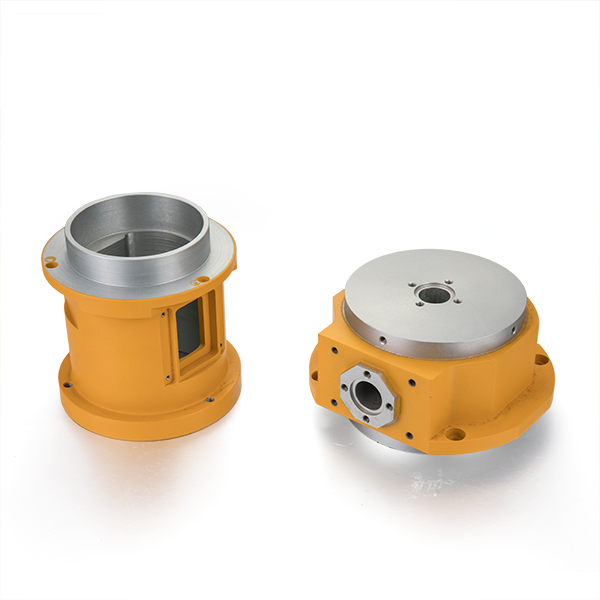
The company’s existing ring-process guide describes its route as closed-die hot forging with CNC machining and explicitly says it is not a ring-rolling mill. A rolling-specific inquiry therefore needs an identified rolling source alongside the general forging offer.
For a rolled-ring requirement, establish who performs rolling and who owns the associated inspection and traceability obligations before including that route in an offer. For a forged-and-machined component, assess the proposed blank and downstream work against the same drawing. The useful supplier contribution is an executable route, including a clear boundary where another production source is needed.
Questions after choosing a preferred route
Can a rolled ring have a shaped cross-section?
Yes, contoured rolling can form features on the inner or outer section. The proposed profile still needs to suit the specific mill, tooling and subsequent machining plan.
Does a no-weld requirement rule out open-die forging?
No. Seamless rings can be made through open-die mandrel forging. Verify the proposed route rather than interpreting “open die” as a welded construction.
Can an old sample authorize a different production source?
It can provide a reference, but it does not establish the new source’s process or traceability. Assess the proposed change against the approved requirements.
Does changing the temper leave the dimensional plan unaffected?
Do not assume so. Review the processing sequence, material requirements and finish-machining allowance together before extending an earlier approval.
Should rough-machined rings use the final drawing as their only acceptance document?
The final drawing identifies the end requirement, but the intermediate supply also needs an agreed condition and stock envelope. Identify which features are complete and which remain for the next operation.
What should be retained for a repeat order?
Keep the approved drawing revision, route, material condition and inspection requirements with the supply record. Record approved changes so a similar-looking ring does not silently become a different manufacturing proposal.
Request a route proposal with the ring quotation
Provide the finished drawing, mandatory process notes and delivered-condition requirements before asking suppliers to compete on the ring. For a drawing-based inquiry to XinYe, include the order pattern and acceptance documents needed. Ask the proposal to show the blank envelope and manufacturing responsibilities so the preferred route can be reviewed against the actual specification.
Post time: Nov-18-2026