6082-T6 is the wrought aluminium alloy most European buyers specify when they need a hot-forged part, because it fills complex die shapes cleanly, machines well, resists corrosion, and lands at roughly 260–280 MPa yield and 310–330 MPa tensile strength after solution treatment and artificial ageing. This guide covers what the T6 condition really commits a supplier to, how 6082 compares with 6061-T6 and 7075-T6, and the six questions that separate a supplier who can deliver 6082-T6 from one who can only quote it.
Quick answer
- 6082 is the alloy and T6 is the process, not a property. In EN 573-3 it is written EN AW-6082, chemical designation AlSi1MgMn, and T6 means solution heat treated then artificially aged — the ageing step is what sets the final strength.
- It became Europe’s default because it forgives the design. The higher silicon level improves die fill on complex shapes while low copper keeps corrosion resistance high, so 6082-T6 delivers near-6061 strength with better formability and weldability.
- The strength case is modest and the fabrication case is strong. Typical 6082-T6 is 260–280 MPa yield and 310–330 MPa tensile against about 503 MPa yield for 7075-T6, so buyers choose 6082 for complexity, corrosion exposure and welding, not for maximum strength.
- Ask where the ageing happens. We solution treat, harden and artificially age in our own factory, and the oven ageing produces the T6 state — a supplier who subcontracts it cannot guarantee the delivered part.
- Specification discipline prevents most disputes. Write EN AW-6082, name the product form and standard, state the temper route, fix dimensions and surface together, and agree the certificate type before tooling.
Why 6082 Became the European Default
6082 was designed for European forging practice, which is why it sits in almost every European forged-part drawing. It carries a deliberately high silicon level — roughly 0.80 to 1.40% per the EN 573-3 bands for EN AW-6082 — because silicon improves fluidity in the die. More silicon means the metal fills fine detail and thin ribs on the first press pass instead of tearing or cold-shutting, which matters enormously on complex geometry.
The second decision was keeping copper down, to not more than 0.20%, with chromium held in a narrow 0.05 to 0.25% band. Because corrosion resistance in aluminium is governed largely by copper content, 6082 gives up very little strength to stay clean in salt, moisture and industrial atmospheres — decisive for the oil and gas detection, automotive and food-equipment buyers who make up much of our order book.
The alloy also machines well. High silicon raises tool wear against a softer pure aluminium, but it holds a clean edge on a machined bore and gives a stable surface for anodising, which is why 6082-T6 appears in both structural and appearance-critical parts.
What the T6 Condition Actually Commits a Supplier To
T6 is not a strength figure; it is a route, and the route is where quality is won or lost. In our published process, the forged component is solution treated, hardened and artificially aged in our own factory. Ageing hardens the part by precipitation of the alloy constituents, and where that ageing happens — in the oven, for physical state T6 — is what gives the product the mechanical characteristics required for its service.
That sequence explains the dimensional behaviour buyers ask about most. Solution treatment dissolves the alloying elements, hardening leaves them in a supersaturated state, and ageing brings them back out as fine precipitates that raise strength. The part stays dimensionally unstable until ageing completes, so a tolerance-critical feature needs the ageing cycle accounted for before final machining.
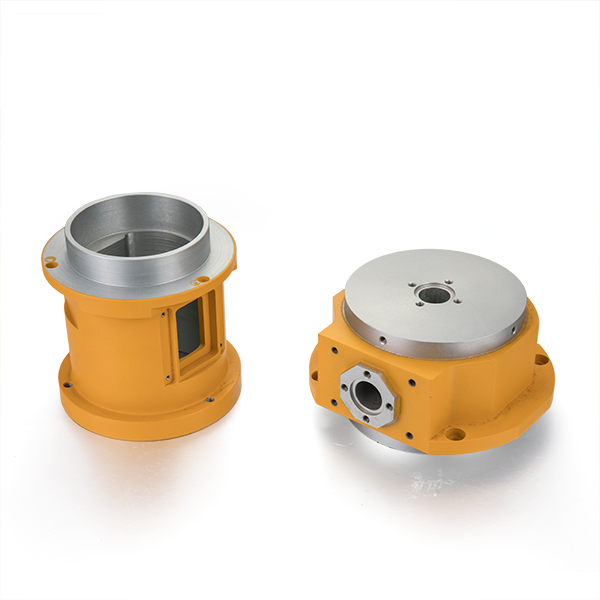
Our published forging characteristics explain why it is specified this way: maximum resistance values for tensile strength, alternating bending fatigue limit, elongation and resilience, good electrical conductivity, absolute tightness to liquids and gases, high chemical resistance, and a homogeneous, porosity-free structure.
6082-T6 vs 6061-T6 vs 7075-T6: Six Numbers That Decide It
There is no universally correct forging alloy, and the choice narrows to six properties plus the fabrication route. The table sets out typical published values for the T6 condition; treat them as a shortlisting aid, and confirm certification against the certificate issued for your order.
| Property | 6082-T6 | 6061-T6 | 7075-T6 |
|---|---|---|---|
| Yield strength, Rp0.2 | About 260 to 280 MPa | About 276 MPa | About 503 MPa |
| Tensile strength, Rm | About 310 to 330 MPa | About 310 MPa | About 572 MPa |
| Elongation, A5 | About 8 to 10% | About 8 to 12% | About 5 to 7% |
| Density | 2.70 g/cm³ | 2.70 g/cm³ | 2.81 g/cm³ |
| Thermal conductivity | About 160 W/m·K | About 167 W/m·K | About 130 W/m·K |
| Electrical conductivity | About 28 to 32 MS/m | About 43 MS/m | About 22 MS/m |
Two lines matter more than the rest for a forging buyer. Because 6082-T6 and 6061-T6 land within roughly 15 MPa of each other in yield strength, the choice between them is not a strength decision — it is a fabrication decision about die fill, weldability and finish. And because 7075-T6 more than doubles the yield strength while losing a third of the elongation, it buys weight reduction at the cost of formability.
Choose 6082-T6 when…
Choose 6082-T6 when the part has complex geometry with thin walls or ribs that must fill cleanly, when it is welded into an assembly, when it sees a corrosive environment, or when it needs a good anodised appearance at moderate cost. It is the default for detection housings, hydraulic bodies, brackets and light structural parts.
Choose 6061-T6 when the design needs higher electrical or thermal conductivity, or when the part is a simple extrusion-driven geometry where 6061′s lower silicon content helps in the die.
Choose 7075-T6 when weight reduction is the primary constraint and you can accept a tighter forming window and a more demanding corrosion protection plan.
How the Part Is Actually Made Here
The production question behind the alloy question is simple: can the supplier run the whole route, and can you see the evidence? We publish the process on our aluminium hot forging page and the finished parts on the aluminium hot forging parts page.
Our published equipment list matters in one specific way. The production capability page shows friction presses from 300 to 1000 tons and column hydraulic machines from 100 to 630 tons, alongside 4-axis CNC machining centres, turning and milling — so the forging and the finish of a tolerance-critical bore happen under one roof.
The control side is published too. We hold ISO 9001-2015 and SA8000, run 130 employees with 80 in production and 50 in development, engineering and quality, and hold more than 20 technical model patents. Inspection uses a CMM inspection machine, a video measuring system, a GNR spectrum analyser, a roughness meter and a spring tension testing machine, with traceable files from raw material to finished part.
Certification, Documentation and the Part That Arrives
Certificate scope decides whether the alloy you ordered is the alloy you received. EN 10204 sets out the types of inspection document, and a type 3.1 certificate issued by the manufacturer and a type 3.2 certificate validated by an independent inspector are not the same commitment. Our published FAQ states we can provide most documentation including certificates of analysis or conformance, insurance and origin paperwork, so fix the document type at order stage.
Two further points on the delivered part. First, our published documentation includes export packing, specialised packing for dangerous goods and validated cold-storage shippers, with non-standard packing carrying an additional charge — worth flagging early if your parts are anodised and surface-sensitive. Second, we publish that prices are subject to change with supply and market factors and an updated price list is issued after contact, so treat any figure as indicative.
Our about page records main customers in Europe, North America and Russia across healthcare, automotive and food manufacturing equipment, with parts going into fire and gas safety detection, aerospace turbine inlet and transmission components, and cream whippers and tabletop cooking stoves.
Six Details That Make a 6082-T6 Quotation Comparable
Six details let us return a specified forging and a written quotation instead of a catalogue entry.
Pre-quotation checklist for an EN AW-6082 T6 programme
- Write the alloy as EN AW-6082. The full wrought designation carries the product form and standard, and removes the argument about whether the part is a forging, an extrusion or a casting.
- Name the product standard and the product form separately. Forged aluminium products carry their own general requirements, so the standard and the form have to be stated rather than assumed.
- State the temper and where the ageing happens. Confirm that T6 is achieved by solution treatment followed by artificial ageing, and whether that ageing is in house or subcontracted.
- Fix dimensions and surface in one instruction. As-forged tolerance, machined feature tolerance and the anodised or pickled condition interact, so they belong in a single requirement.
- Require the certificate scope, not just a certificate. Ask which inspection document type will be issued and what analysis it actually covers before the tooling is cut.
- Confirm packing and volume band. Carton quantity, protective packing and export documentation decide the freight and the damage rate, and the price list is issued against the volume you commit to.
Where I Would Push Back on the 6082 Rule
I would push back on any brief that specifies 6082-T6 because it is the European default rather than because it fits the load case. The default is a sensible starting point and is right more often than not, but one that arrives without a load calculation quietly sets the alloy’s properties and forces the design to live with them. Send us the working load, environment and geometry, and we will say whether 6082-T6 is genuinely the economical choice.
Two limits on what I have written here. The property figures in Table 1 are typical published values for the T6 condition, not certified results for a specific part; the certification that matters is the one issued against your order. And I will not argue that 6082-T6 is the strongest option available — the honest claim is narrower: it is the best-balanced forging alloy for most European industrial applications, and the one most likely to be already in your supplier’s process.
Sourcing EN AW-6082 T6 aluminium forgings?
Send us the drawing, the product form, the temper route, the destination market and your volume band, and we will return a specified forging with published ratings and a quotation.
Frequently Asked Questions
1. What does 6082-T6 actually mean?
6082 is the alloy and T6 is the temper. In EN 573-3 it is written EN AW-6082 with the chemical designation AlSi1MgMn, and T6 means solution heat treatment followed by artificial ageing. Our process solution treats, hardens and artificially ages the forged component in the factory, and the oven ageing produces the T6 physical state.
2. Why is 6082 preferred over 6061 for forging?
6082 carries more silicon, which improves fluidity in the die and makes complex shapes easier to fill, while its copper content is kept low so corrosion resistance stays high. In the T6 condition it lands at roughly 260 to 280 MPa yield and 310 to 330 MPa tensile, close to 6061-T6 at around 276 MPa, so the gain is formability and finish rather than headline strength.
3. How does 6082-T6 compare with 7075-T6?
7075-T6 is roughly twice as strong, at about 503 MPa yield against 260 to 280 MPa for 6082-T6, but it forges less easily, welds less well and resists corrosion poorly. 6082-T6 suits complex, corrosion-exposed or welded parts; 7075-T6 suits the case where weight reduction is the primary driver.
4. Can you supply EN AW-6082 T6 with full certification?
Yes. Our factory operates under ISO 9001-2015 and SA8000, and we can provide certificates of analysis or conformance, insurance and origin documentation, with the inspection document type agreed at order stage. The published inspection equipment includes a CMM inspection machine, a video measuring system and a GNR spectrum analyser.
5. What are your minimum order quantity and lead times?
All international orders carry an ongoing minimum order quantity, and an updated price list is issued once you make contact. Samples take about 7 days, and mass production takes 20 to 30 days after the deposit is received and final product approval is given, with 30% deposit and the 70% balance against a copy of the bill of lading.
6. What surface finish can you apply to 6082-T6 forgings?
We do pickling, which removes the surface layer to leave the part free of oxides, fats and processing residues, and anodic oxidation, which generates an aluminium oxide layer usually between 5 and 20 microns. The anodic layer can be supplied neutral or coloured, matched to the intended use of the part.
Post time: Nov-03-2026