
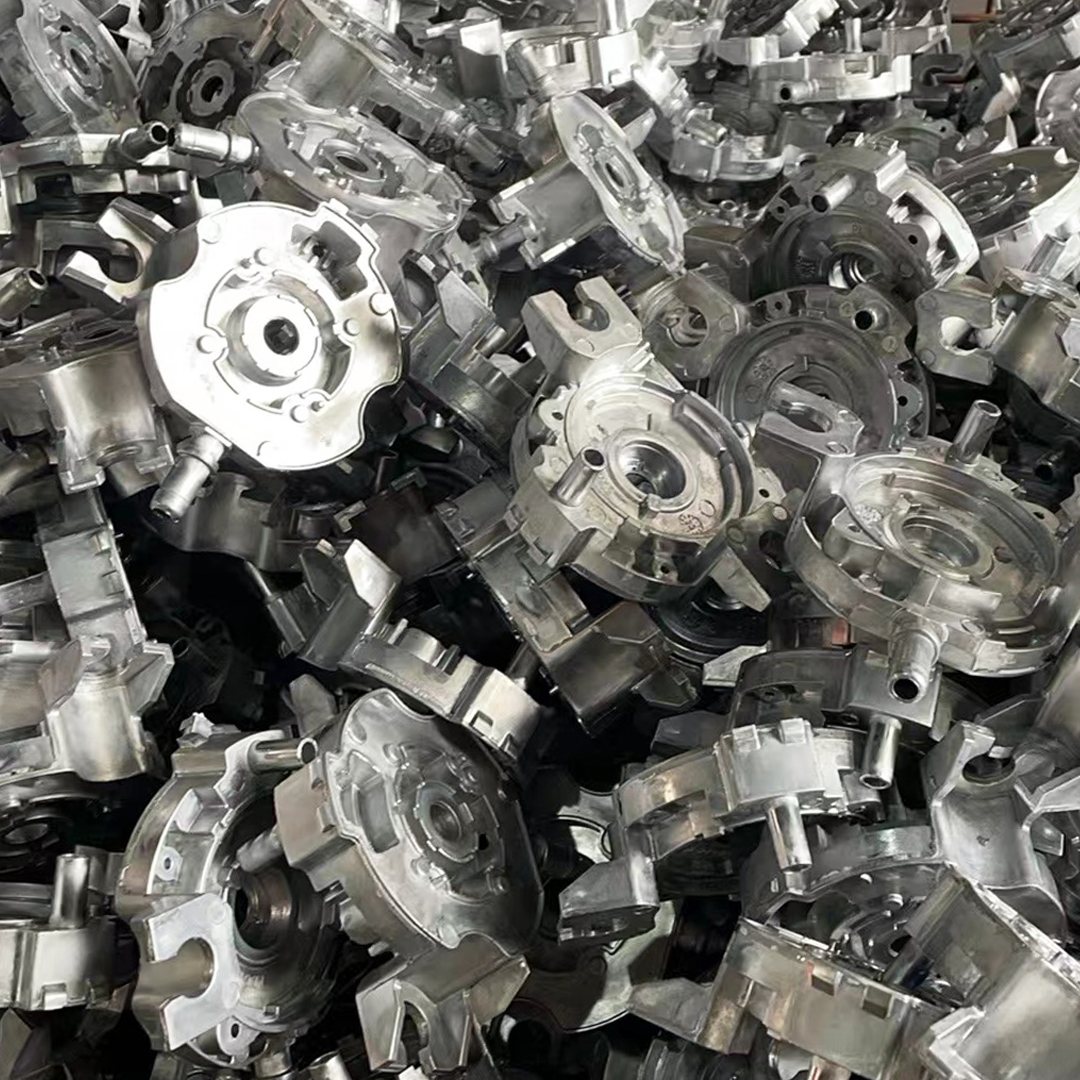
1. The Porosity Problem in ADC12 Aluminum Die Casting
Porosity in aluminum die casting is the most common quality issue for ADC12 parts and the most common driver of casting rejection. Porosity appears as internal voids visible in cross-section or via X-ray inspection, and it degrades three functional dimensions of the casting: leak-tight performance (gas, fluid, pressure), heat-treat compatibility (porosity causes blistering during T6 or similar heat treatment), and mechanical strength (porosity concentrates stress and reduces fatigue life).
The trap is treating porosity as a single problem. Porosity has two distinct root causes that require different interventions, and a single-fix approach (e.g., only vacuum assist, only shot profile adjustment) addresses one cause while leaving the other untouched. A complete porosity reduction program addresses both gas porosity and shrinkage porosity.
2. Two Mechanisms — Gas Porosity vs Shrinkage Porosity
| Mechanism | Source | Typical Location | Mitigation |
|---|---|---|---|
| Gas porosity | Air or hydrogen trapped in molten metal during injection | Random distribution; often near cavity surface or at section transitions | Vacuum assist, slow shot profile, proper venting, degassed melt |
| Shrinkage porosity | Voids formed when casting solidifies and metal contracts without feed | Last-to-solidify regions; typically at hot spots in thick sections | Process parameters, gate design, overflow placement, cooling line design |
| Combined porosity | Gas and shrinkage occur together in thick sections | Thick-walled regions with poor venting | Combined vacuum assist + process optimization + design changes |
The two mechanisms are sometimes confused because they look similar in cross-section. The diagnostic distinction requires X-ray inspection or metallographic cross-section: gas porosity tends to be round or near-spherical (because gas bubbles form spheres), while shrinkage porosity tends to be irregular and dendritic (because shrinkage follows the solidification pattern). A supplier that runs only vacuum assist but ignores gate design will reduce gas porosity but leave shrinkage porosity, and the casting will still fail leak testing if the shrinkage porosity forms a leak path.
3. Vacuum Assist Process — How It Reduces Air Traps
Vacuum assist in die casting is a process modification that evacuates the die cavity and the shot sleeve before the molten metal is injected, removing the air that would otherwise be trapped in the casting. A typical vacuum assist system achieves 50-100 mbar absolute pressure in the cavity before injection, which is approximately 1-10% of normal atmospheric pressure.
The process steps are: (1) close the die; (2) evacuate the cavity to 50-100 mbar using a vacuum pump (typically a rotary vane or claw pump); (3) evacuate the shot sleeve to a similar pressure; (4) inject the molten metal under high pressure (typically 50-100 MPa) into the evacuated cavity; (5) the metal fills the cavity with minimal air displacement because most of the air has already been removed; (6) the metal solidifies, with the remaining low-pressure gas having far less mass to be trapped.
The reduced cavity pressure means the air displaced by the incoming metal has far less mass to be trapped, and the resulting casting has significantly reduced gas porosity. The effect is most pronounced in thick-walled sections where conventional die casting struggles to vent the air fast enough. For thin-walled sections, the conventional process can vent adequately and vacuum assist provides less incremental benefit. The vacuum pump down time adds 3-8 seconds per cycle to the overall cycle time, depending on the cavity volume and the target vacuum level. The cycle time penalty is one of the four cost components driving the 15-30% premium; the other three are capital equipment, maintenance, and instrumentation. The trade-off is a well-understood one and the cost-benefit typically favors vacuum assist for any functional casting above 5K pieces per year.
4. ADC12 Alloy — Why It Is Particularly Susceptible
ADC12 (Japanese standard equivalent to A383) is one of the most commonly used aluminum die casting alloys and is particularly susceptible to porosity because of its composition and solidification behavior. The composition breakdown matters:
| Element | ADC12 Spec Range | Effect on Porosity Susceptibility |
|---|---|---|
| Silicon (Si) | 10.0-13.0% | Improves fluidity but raises hydrogen pickup risk; affects solidification range |
| Copper (Cu) | 1.5-3.5% | Improves strength and machinability; can contribute to hot tearing |
| Magnesium (Mg) | 0.3% max | Improves strength; minor effect on porosity |
| Iron (Fe) | 1.3% max | Forms intermetallics; minor effect on porosity |
| Others | Balance aluminum | Zn, Mn, Ni affect other properties |
The high silicon content (10-13%) is the primary driver of porosity susceptibility. Silicon improves the alloy’s fluidity, which is why ADC12 flows into thin-walled features so well — but fluidity also means the alloy picks up hydrogen during melting more readily than low-silicon alloys. Hydrogen is highly soluble in liquid aluminum and almost insoluble in solid aluminum, so as the casting solidifies, the hydrogen is rejected into the last-to-solidify regions and forms gas porosity.
The relatively wide solidification range (a range of solidus-liquidus temperatures rather than a single eutectic point) extends the time during which shrinkage porosity can form. The combination of hydrogen susceptibility and wide solidification range is what makes ADC12 a higher-porosity alloy than lower-silicon options like A360 or A380. For leak-tight ADC12 castings, vacuum assist is typically the most effective single intervention. The hydrogen pickup is most likely during melting and holding in the furnace; a properly degassed melt using rotary degassing or flux injection can reduce dissolved hydrogen by 60-80%, which is a process intervention that complements vacuum assist. The combination of degassed melt + vacuum assist typically achieves the lowest porosity results in production.
5. When to Specify Vacuum Assist — Decision Rule
Specify vacuum assist for ADC12 in three scenarios. The decision rule is driven by the post-casting functional requirement, not by an automatic default.
| Scenario | Why Vacuum Assist | Functional Benefit |
|---|---|---|
| Leak-tight applications | Reduced porosity eliminates leak paths through the casting | Casting holds pressure (gas, hydraulic, fluid, vacuum) without leakage |
| Post-casting heat treatment | Low porosity prevents blistering during T6 or similar heat treatment | Casting can be heat-treated for higher strength without surface defects |
| Structural castings | Low porosity improves fatigue life, impact strength, ductility | Casting meets structural mechanical requirements consistently |
| Decorative / non-functional | Vacuum assist not required by function | Castings are evaluated on visual fit and dimensions only |
The trap is specifying vacuum assist as a default out of caution. Vacuum assist adds 15-30% cost over conventional die casting, and the cost premium should be justified by the functional requirement. For decorative or non-functional castings, vacuum assist is a BOM cost that the buyer cannot recover in downstream value. For functional castings in any of the three scenarios above, vacuum assist is a clear BOM win and the cost premium is typically recovered within the first production year. A practical decision rule is to ask three questions before specifying vacuum assist: (1) does the casting need to hold any pressure differential (gas, hydraulic, fluid)? (2) will the casting be subjected to heat treatment? (3) are mechanical properties critical to the application? A yes to any of the three justifies the vacuum assist specification; a no to all three suggests conventional die casting is sufficient.
6. Cost-Benefit Analysis — When the 15-30% Premium Pays Back
Vacuum assist die casting typically carries a 15-30% cost premium over conventional die casting, driven by four cost components: vacuum system capital equipment, vacuum system maintenance and seal replacement, longer cycle time (vacuum pump down adds 3-8 seconds per cycle), and additional process control instrumentation.
The premium is recovered through downstream value: reduced machining scrap (fewer porosity-driven rejects), eliminated leak-test failures, broader material choices (vacuum-assist allows more alloy options), and ability to heat-treat the castings. The payback analysis depends on the order volume and the post-casting rejection rate, but as a general rule, the premium pays back within the first production year for any ADC12 casting that meets the decision-rule scenarios in Section 5.
7. Supplier Verification — 5 Dimensions Before Placing the Order
Supplier vacuum assist capability verification covers five dimensions. The audit should be conducted before the first purchase order is confirmed, with on-site review of the supplier’s equipment and process data.
| Verification Dimension | What to Verify | Pass Threshold |
|---|---|---|
| Equipment | Vacuum system installed on the die casting machines (not just retrofit) | Vacuum pump capacity, sealed cavity lines, calibrated pressure gauges |
| Vacuum level | Achievable cavity pressure before injection | 50-100 mbar absolute or lower |
| Process data | Porosity data on comparable ADC12 part with X-ray inspection | Internal porosity area below 3% on comparable part |
| Leak-test capability | Leak testing on pressure-tight castings | Pressure decay or mass spectrometer leak test equipment in-house |
| Heat-treatment capability | Heat treatment for ADC12 castings (T6 or similar) | Heat treatment furnace and aging oven capacity, with T6 process documentation |
The trap is accepting the supplier’s claim of “we can run vacuum assist” without verifying the equipment and process data. A supplier that has a vacuum pump on the floor but cannot demonstrate porosity data on a comparable part is signaling that the process is not yet mature. The OEM should request the porosity data (preferably X-ray images with quantified internal porosity percentage) before the order is placed, and should validate that the data corresponds to a part comparable in size and geometry to the new order.
8. Porosity Decision Tree — How to Pick the Right Process
A consolidated porosity decision tree that maps the casting functional requirement to the appropriate process intervention. Each row is a requirement scenario; the right column is the recommended process.
| Functional Requirement | Recommended Process | Why This Process |
|---|---|---|
| Decorative / non-functional | Conventional ADC12 die casting | No functional demand for low porosity; cost-optimized |
| Dimensional / assembly fit only | Conventional ADC12 die casting + good shot profile | Functional tolerance is loose; moderate porosity acceptable |
| Pressure-tight (low pressure) | Conventional ADC12 + shot profile + leak test rejection | Process control + post-casting leak test catches leaks |
| Pressure-tight (medium / high pressure) | Vacuum-assist ADC12 + leak test verification | Functional reliability requires low internal porosity |
| Post-casting heat treatment | Vacuum-assist ADC12 (mandatory) | Porosity-free base metal prevents blistering |
| Structural / fatigue critical | Vacuum-assist ADC12 + X-ray 100% inspection | Functional reliability requires every casting to be X-ray verified |
| Critical / safety-of-personnel | Vacuum-assist + X-ray 100% + batch testing | Highest reliability; vacuum + dual inspection mandatory |
The decision tree is the OEM’s framework for selecting the appropriate process intervention. The decision flow is: start at the top (decorative) and step down based on the functional requirement. The higher the reliability demand, the more process control layers are added. The cost accumulates accordingly, but the cost is justified by the functional benefit at each step.
9. Buying Checklist, FAQ & Compliance Reference Table — ADC12 Porosity Decision Before Sign-Off
A combined pre-order buying checklist and FAQ for the OEM running the ADC12 vacuum assist conversation today.
FAQ 1 — What causes porosity in aluminum die casting?
A. Two mechanisms: gas porosity (trapped air/hydrogen) and shrinkage porosity (solidification voids). Vacuum assist addresses gas; gate design addresses shrinkage.
FAQ 2 — What is vacuum assist in die casting?
A. Process that evacuates cavity to 50-100 mbar before injection. Removes 90-99% of the air that would otherwise be trapped.
FAQ 3 — How much does vacuum assist reduce porosity?
A. 50-80% reduction in internal porosity area. Conventional casting: 5-15% porosity. Vacuum-assist casting: 1-3% porosity.
FAQ 4 — Why is ADC12 susceptible to porosity?
A. High silicon content (10-13%) raises hydrogen pickup. Wide solidification range extends shrinkage window. ADC12 = Japanese equivalent of A383.
FAQ 5 — When to specify vacuum assist?
A. Three scenarios: leak-tight applications + post-casting heat treatment + structural mechanical requirements. Not justified for decorative parts.
FAQ 6 — Cost premium for vacuum assist?
A. 15-30% over conventional. Cost components: equipment, maintenance, cycle time, instrumentation. Recovered through scrap reduction + heat-treat + downstream value.
FAQ 7 — How to verify vacuum assist capability?
A. Five dimensions: equipment installed + cavity pressure 50-100 mbar + comparable part porosity data + leak-test capability + heat-treatment capability.
10. Compliance Reference Table — Standards Anchored to ADC12 Vacuum Assist Die Casting
| Standard / Reference | Scope | ADC12 / Vacuum Assist Reference | Geographic Anchor |
|---|---|---|---|
| ASTM A383 | Aluminum alloy die castings — ADC12 equivalent | ADC12 alloy baseline reference | United States |
| ASTM B85 | Aluminum alloy die castings — General specification | ADC12 specification scope | United States |
| ASTM E505 | Reference radiographs for aluminum and magnesium casting inspection | X-ray inspection reference for porosity | United States |
| ISO 9001 | Quality management systems — Requirements | Manufacturer quality system reference | International (ISO) |
| NADCAP AC7110 | Heat treat for castings | T6 heat treatment process certification for ADC12 | United States |
| ISO 8062-3 | Casting system — Parting line allowances | Dimensional baseline for ADC12 castings | International (ISO) |
| ASTM E8 | Tension testing of metallic materials | Mechanical strength verification (tensile properties) | United States |
| ASTM E466 | Practice for conducting force controlled constant amplitude axial fatigue tests | Fatigue life verification for structural castings | United States |
The compliance reference table above lists the standards that anchor the ADC12 vacuum assist die casting conversation. For OEM specifying the alloy, the binding reference is ASTM B85 (US specification for aluminum die castings) and ASTM A383 (specific composition for ADC12 / A383 equivalent). For OEM specifying porosity inspection, the binding reference is ASTM E505 (X-ray reference images). For OEM specifying heat treatment of ADC12 castings, the binding reference is NADCAP AC7110 (heat treat certification for castings). The casting supplier typically provides the alloy certification, X-ray inspection data, and heat treatment process documentation; the OEM is responsible for the functional specification.
About the Author
Alison Pan — International Sales Manager at Ningbo Jiangbei XinYe Metal Works Co., Ltd.
Alison Pan is the International Sales Manager at Ningbo Jiangbei XinYe Metal Works Co., Ltd., the Ningbo-based manufacturer behind cnnbxinye.com. The factory pairs Japanese-sourced core production equipment with a strict multi-stage quality-control program to deliver forging rings, lost-wax castings, and stamped-steel components for OEM and ODM partners worldwide. Alison works with global buyers on technical drawing review, material selection, and order scheduling, with a focus on reducing tooling iteration cycles and aligning every shipment with the buyer’s incoming-inspection plan.
Post time: Jul-23-2026