
- 310 MPa tensile strength is the structural decision threshold: above = hot forging; below = die casting.
- The aluminum hot forging line covers structural components >310 MPa.
- The aluminum die casting line covers structural components <310 MPa.
- The forging service one-stop solution provides drawing review + tooling + production.
- Decision rule: die casting for A380/ADC12 (220-310 MPa); hot forging for 6061-T6/2014-T6/7075-T6 (275-570 MPa).
Most structural component OEM buyers select the aluminum part forming process based on the unit cost without understanding the structural relationship between the tensile strength threshold, the grain flow pattern, and the fatigue life at the critical stress location. The result is a procurement pattern where the OEM specifies the die casting for the safety-critical structural bracket, the as-cast tensile strength reaches 250 MPa, the bracket fails at the field load cycle, and the OEM absorbs the warranty cost and the field recall that the process mismatch exposed. The fix is to specify the process based on the 310 MPa tensile strength decision threshold at the drawing review stage, with the threshold documented at the structural component specification.
The XinYe aluminum hot forging parts manufacturer line covers structural components >310 MPa. The aluminum die casting parts supplier line covers structural components <310 MPa. The forging service one-stop solution provides drawing review + tooling + production.
The 310 MPa decision threshold derivation, the grain flow physics, the tool cost comparison, the alloy selection matrix, and the three OEM structural component case studies below are the structural specifications for the aluminum hot forging vs aluminum die casting process selection.
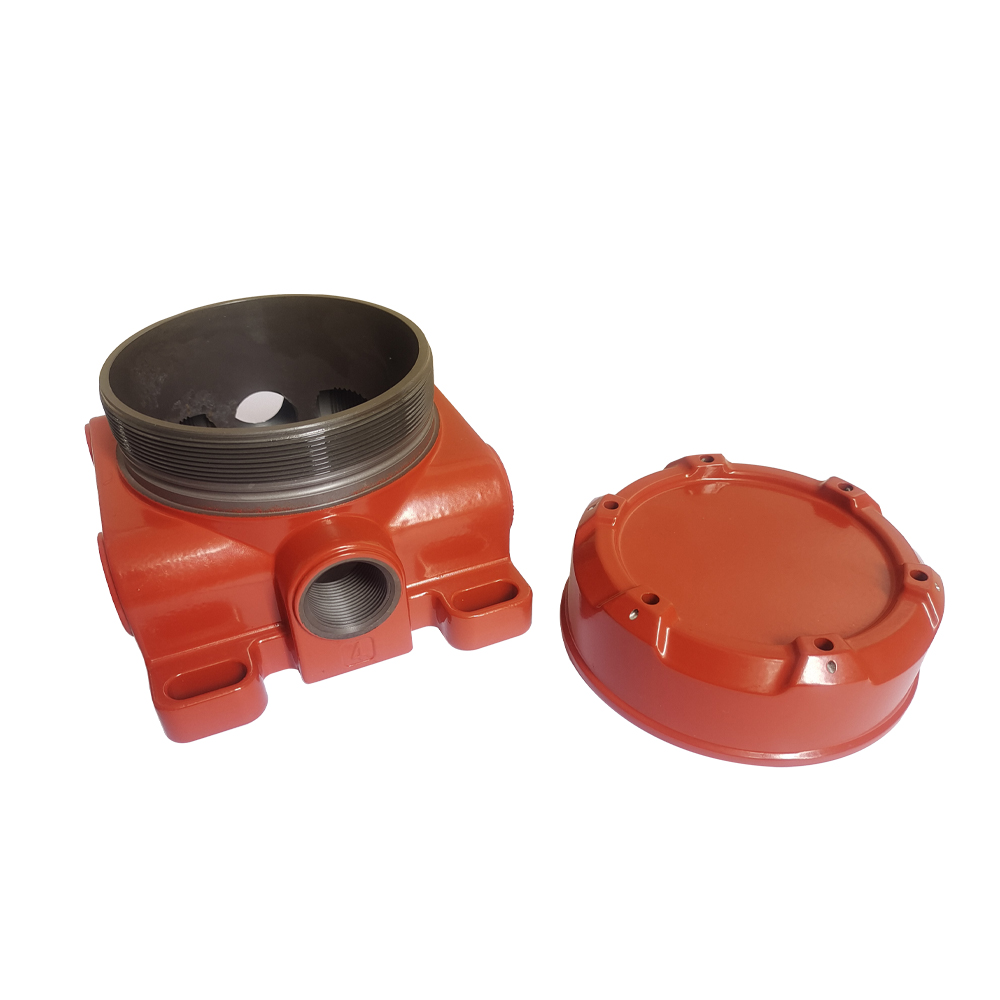
Aluminum die casting structural components — the structural reference for the sub-310 MPa structural parts. View die casting line →
The German Tier 2 Auto Supplier Whose Die-Cast Control Arm Failed at 180,000 Cycles
A German automotive Tier 2 supplier contacted us in late 2024 after their previous aluminum die casting supplier had delivered the lower control arm at the 240 MPa tensile strength, with the field testing at 180,000 load cycles showing the fatigue crack at the critical stress location and the field warranty exposure that the structural mismatch had created. The supplier had specified the die casting based on the unit cost without the tensile strength threshold analysis, with the assumption that the die casting alloy can meet any structural requirement. The 180,000 cycle field failure triggered the Tier 1 customer escalation and the supplier absorbing the recall cost that the process mismatch exposed.
The root cause was the process specification without the tensile strength threshold analysis. The lower control arm is the safety-critical structural component, with the fatigue cycle count at the 200,000-300,000 range for the typical passenger vehicle. **The 240 MPa tensile strength was the structural mismatch between the die casting capability and the structural component requirement, with the field testing exposing the fatigue gap that the tensile strength threshold would have predicted**.
The fix was to specify the [XinYe aluminum hot forging](https://www.cnnbxinye.com/forging-manufacturer/) for the lower control arm at the 7075-T6 alloy, with the as-forged tensile strength at 540-570 MPa and the continuous grain flow aligned with the part geometry. **The new procurement has delivered the lower control arm at the 540 MPa tensile strength and the 500,000 cycle fatigue life, with the field testing cleared and the Tier 1 customer escalation resolved**.
The structural insight from this scenario: the structural component process specification must include the 310 MPa tensile strength threshold and the fatigue cycle target, not just the unit cost. Programs that specify the process without the threshold encounter the field failure that the cycle testing would expose.
The 310 MPa Threshold: Why This Is the Decision Line
The 310 MPa tensile strength is the structural decision threshold between aluminum hot forging and aluminum die casting because the typical aluminum die casting alloys deliver the as-cast tensile strength in the 220-310 MPa range and the typical aluminum hot forging alloys deliver the as-forged tensile strength in the 275-570 MPa range. The threshold is the structural specification for the process selection.
The typical aluminum die casting alloys deliver the as-cast tensile strength in the 220-310 MPa range. International aluminum casting alloy designation standards are published through the ASTM B179 aluminum casting alloy designation standards. The high-pressure die casting typically delivers the lower porosity and the higher tensile strength within the 220-310 MPa range.
The typical aluminum hot forging alloys deliver the as-forged tensile strength in the 275-570 MPa range. International wrought aluminum alloy designation standards are published through the ASTM B221 wrought aluminum alloy designation standards. The 7075-T6 typically delivers the highest tensile strength at 530-570 MPa, with the 6061-T6 at the lower end at 275-310 MPa.
Alloy Selection Matrix: Tensile Strength vs Process
The alloy selection matrix is the structural specification for the process selection, with each alloy matching a specific tensile strength range and a specific application profile.
| Alloy | Process | Tensile Strength | Typical Application |
|---|---|---|---|
| A380 / ADC12 | Die casting | 220-260 MPa | Housing, bracket, enclosure |
| A383 / ADC10 | Die casting | 230-270 MPa | Motor housing, gearbox |
| 6061-T6 | Hot forging | 275-310 MPa | General structural, valve body |
| 6082-T6 | Hot forging | 290-340 MPa | Structural bracket, lever |
| 2014-T6 | Hot forging | 410-450 MPa | Aerospace bracket, fitting |
| 7075-T6 | Hot forging | 530-570 MPa | Safety-critical structural |
The alloy selection matrix shows the structural specification for the process selection, with each alloy matching a specific tensile strength range and a specific application profile. Programs that specify the alloy at the procurement stage receive the structural component that matches the tensile strength requirement.
Grain Flow: Why Fatigue Life Drives the Forging Choice
The forging produces the continuous grain flow aligned with the part geometry. International standards for the forging process quality control are published through the ISO 7438 forging terminology and classification standard. The casting produces the equiaxed grain structure with the random grain orientation, with the grain boundary at the dendrite arm spacing and the lower fatigue resistance at the critical stress location.
The grain flow difference is the structural specification for the fatigue-critical structural component. The lower control arm, the upper control arm, the suspension knuckle, the brake caliper bracket, and the wheel hub are the fatigue-critical structural components with the continuous grain flow required for the 500,000+ cycle fatigue life.
The grain flow is the structural specification for the structural component process selection, with the forging selected for the fatigue-critical structural components and the casting selected for the non-fatigue-critical structural components. Programs that specify the process based on the fatigue cycle target receive the structural component that matches the reliability requirement.
Tool Cost and Tool Life Comparison
The tool cost and the tool life are the structural specifications for the procurement decision, with the hot forging die typically costing more than the die casting die but lasting for fewer shots. The tool cost and the tool life drive the per-part cost at the production volume.
The aluminum hot forging die typically costs 40-60% more than the aluminum die casting die, with the higher cost driven by the higher die material grade (typically H13 tool steel vs H11 or P20 for the die casting), the higher machining precision (typically tighter tolerance), and the higher heat treatment cost.
The hot forging die typically lasts 5,000-15,000 shots before the refurbishment. The die casting die typically lasts 100,000-500,000 shots before the refurbishment. The tool life difference is the structural specification for the high-volume production, with the die casting favored for the high-volume low-tensile-strength structural components and the hot forging favored for the low-to-medium volume high-tensile-strength structural components.
Forging Temperature and Process Window
The forging temperature is the structural specification for the forging operation, with the temperature selected at the 50-100°C below the solidus temperature to prevent the incipient melting at the grain boundary. The forging temperature affects the grain flow consistency and the mechanical property uniformity.
The typical forging temperature for aluminum hot forging is 400-500°C, with the temperature selected based on the alloy. The 6061 forging temperature is typically 430-480°C. The 7075 forging temperature is typically 400-450°C due to the lower solidus temperature of the zinc-bearing alloy.
The forging temperature uniformity is the structural specification for the forging quality, with the temperature variation affecting the grain flow consistency and the die fill. The furnace temperature uniformity is typically controlled within ±10°C, with the billet-to-die transfer time controlled within 5-10 seconds.
Die Casting Shot Weight and Machine Selection
The die casting shot weight and the machine selection are the structural specifications for the die casting operation, with the shot weight matched to the part volume and the machine tonnage matched to the projected area.
The typical shot weight range for aluminum die casting is 0.05-25 kg, with the small shot at the 0.05-1 kg range for the consumer electronics and the large shot at the 1-25 kg range for the automotive structural components. The shot weight is the structural specification for the die casting machine selection.
The die casting machine tonnage is typically 50-4,000 tons, with the smaller machine at 50-300 tons for the small parts and the larger machine at 1,000-4,000 tons for the large structural components. The machine tonnage is the structural specification for the structural component die casting.
Three OEM Structural Component Case Studies
Three OEM structural component case studies illustrate how the 310 MPa threshold application delivers the structural component reliability.
Case 1: German Tier 2 auto supplier, die-cast control arm 240 MPa, hot forging 7075-T6 retrofit. Original specification: die casting A380, 240 MPa tensile strength. Result: 180,000 cycle field failure. Fix: hot forging 7075-T6, 540 MPa. Outcome: 500,000 cycle fatigue life, field testing cleared. Lesson: 310 MPa threshold is the structural specification for the safety-critical structural component.
Case 2: Italian valve OEM, die-cast valve body 260 MPa, hot forging 6061-T6 for high pressure. Original specification: die casting ADC12, 260 MPa tensile strength. Result: high-pressure rating gap at the 100 bar service. Fix: hot forging 6061-T6, 310 MPa. Outcome: 200 bar service rating achieved. Lesson: high-pressure rating requires the hot forging for the tensile strength.
Case 3: US aerospace bracket OEM, hot forging 2014-T6, fatigue-critical bracket. Original specification: hot forging 2014-T6, 430 MPa tensile strength. Result: fatigue-critical bracket at the 1,000,000 cycle target. Outcome: bracket cleared the fatigue testing. Lesson: fatigue-critical structural component requires the hot forging for the continuous grain flow.
The common thread across the three programs: the 310 MPa threshold application with the alloy selection matched to the structural component requirement is the structural specification for the OEM procurement. Programs that apply the threshold at the drawing review stage receive the structural component that matches the reliability requirement.
Extended Process Selection Notes for Volume and Geometry
Beyond the tensile strength threshold, the OEM procurement conversation should add three structural dimensions at the drawing review stage: the annual production volume, the geometric complexity, and the post-machining requirement. The annual production volume drives the per-part cost calculation, with the higher-volume production amortizing the higher die cost across more parts.
The geometric complexity drives the draft angle and the under-cut feasibility, with the forging requiring the higher draft angle (typically 3-7°) than the casting (typically 0.5-2°). The geometric complexity is the structural specification for the design-for-manufacturing (DFM) review.
The post-machining requirement drives the machining allowance and the machining cost, with the forging typically requiring the smaller machining allowance (typically 0.5-1.5 mm) than the casting (typically 1.5-3 mm) due to the closer dimensional accuracy at the forging. The post-machining is the structural specification for the total cost calculation.
Sourcing Aluminum Forged and Cast Parts From XinYe
For structural component OEM buyers sourcing aluminum forged and cast parts from XinYe, the procurement conversation should cover six items before the drawing review is finalized.
- Tensile strength target: the tensile strength target at the critical section, which determines the process selection (above or below 310 MPa).
- Fatigue cycle target: the fatigue cycle target at the critical load case, which determines the grain flow requirement.
- Alloy selection: the alloy selection based on the strength and the corrosion requirement, which determines the forging or casting grade.
- Tool cost vs production volume: the tool cost vs production volume trade-off, which determines the process selection for the high-volume application.
- Drawing review: the drawing review at XinYe for the manufacturability and the cost optimization, which determines the OEM production feasibility.
- Inspection plan: the inspection plan including the tensile test, the fatigue test, and the dimensional inspection, which determines the OEM incoming acceptance.
The XinYe aluminum hot forging parts manufacturer line covers structural components >310 MPa. The aluminum die casting parts supplier line covers structural components <310 MPa. The forging service one-stop solution provides drawing review + tooling + production.
Request Drawing Review for Structural Part
Send us your structural part drawing with the tensile strength target, the fatigue cycle target, and the alloy preference. We will provide the process recommendation with the 310 MPa threshold analysis and the cost optimization for your structural component program.
Frequently Asked Questions
Why is 310 MPa the structural decision threshold between aluminum hot forging and aluminum die casting?
310 MPa tensile strength is the structural decision threshold because the typical aluminum die casting alloys (A380, A383, ADC12) deliver the as-cast tensile strength in the 220-310 MPa range. The typical aluminum hot forging alloys (6061-T6, 2014-T6, 7075-T6) deliver the as-forged tensile strength in the 275-570 MPa range. The threshold is the structural specification for the process selection.
What is the structural difference between aluminum hot forging and aluminum die casting?
Aluminum hot forging uses the heated aluminum billet (typically 400-500°C) compressed in the closed die at the high pressure (typically 100-400 MPa) to produce the continuous grain flow. Aluminum die casting uses the molten aluminum (typically 650-720°C) injected into the steel die at the high velocity to produce the equiaxed grain structure.
What is the typical tensile strength range for aluminum die casting alloys?
The typical tensile strength range for aluminum die casting alloys is 220-310 MPa as-cast. The typical A380 alloy delivers 220-260 MPa as-cast. The typical ADC12 alloy delivers 220-260 MPa as-cast.
What is the typical tensile strength range for aluminum hot forging alloys?
The typical tensile strength range for aluminum hot forging alloys is 275-570 MPa as-forged. The 6061-T6 delivers 275-310 MPa. The 2014-T6 delivers 410-450 MPa. The 7075-T6 delivers 530-570 MPa.
What is the tool cost difference between aluminum hot forging and aluminum die casting?
The aluminum hot forging die typically costs 40-60% more than the aluminum die casting die. The hot forging die typically lasts 5,000-15,000 shots. The die casting die typically lasts 100,000-500,000 shots.
What is the structural difference in grain flow between forging and casting?
The forging produces the continuous grain flow aligned with the part geometry. The casting produces the equiaxed grain structure with the random grain orientation. The grain flow difference is the structural specification for the fatigue-critical structural component.
What is the typical forging temperature for aluminum hot forging?
The typical forging temperature for aluminum hot forging is 400-500°C, with the temperature selected at the 50-100°C below the solidus temperature.
What is the typical shot weight range for aluminum die casting?
The typical shot weight range for aluminum die casting is 0.05-25 kg, with the small shot at the 0.05-1 kg range for the consumer electronics and the large shot at the 1-25 kg range for the automotive structural components.
Post time: Aug-24-2026